
Cook Lines and Fryer Areas
Airborne oils and small spills can create a bonded film near fryers, ranges, and prep equipment. These areas often need stronger agitation and careful recovery.
Serving Rochester, New York & surrounding areas
Open 24/7
Kitchen Floor Cleaning · Rochester, NY
Remove grease, food residue, and embedded soil from restaurant tile and grout with a cleaning plan built around your kitchen layout and operating schedule.
Commercial Floor Care
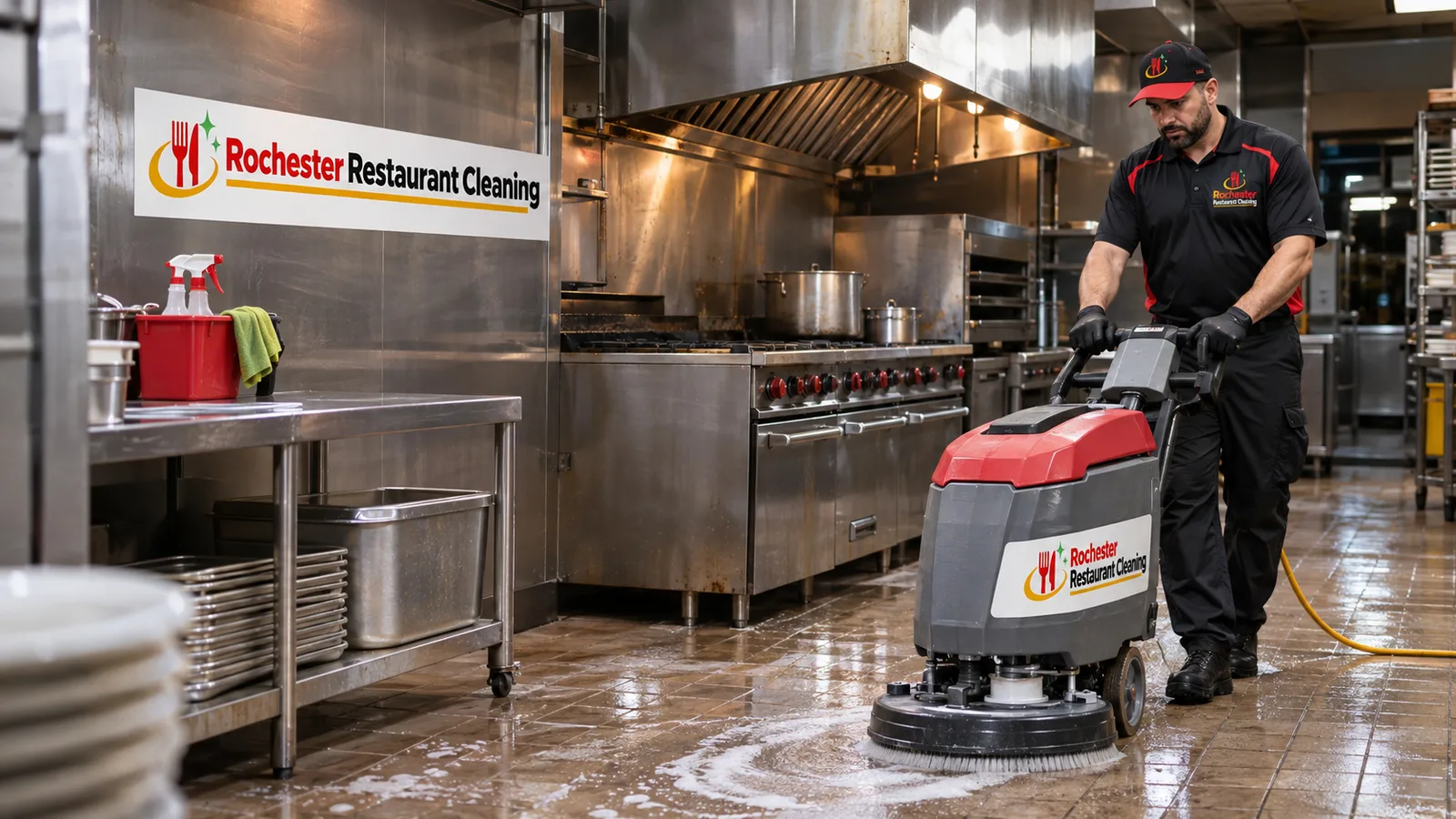
Commercial Kitchen Floor Cleaning requires more than mopping visible soil. Cooking oils, tracked-in dirt, and food residue settle into textured tile, grout joints, corners, and the floor around fixed equipment. If that film is not broken down and extracted, repeated mopping can spread it across a larger area.
Rochester Restaurant Cleaning provides floor cleaning services suited to working commercial kitchens. Our restaurant specialists serving Rochester assess the floor material, soil load, drainage, equipment placement, and hours of operation before setting the scope. The goal is a practical cleaning plan that reaches buildup without disrupting food preparation more than necessary.
Kitchen floors face added pressure during Rochester winters. Snow, slush, deicing residue, and grit enter through receiving doors and employee entrances, then mix with kitchen grease. That combination can leave a stubborn film and abrade floor finishes. Kitchens near downtown delivery routes may also have tight loading schedules, while restaurants in converted buildings in the Neighborhood of the Arts or South Wedge can have compact work areas and limited equipment clearance. The method and timing should account for those conditions.
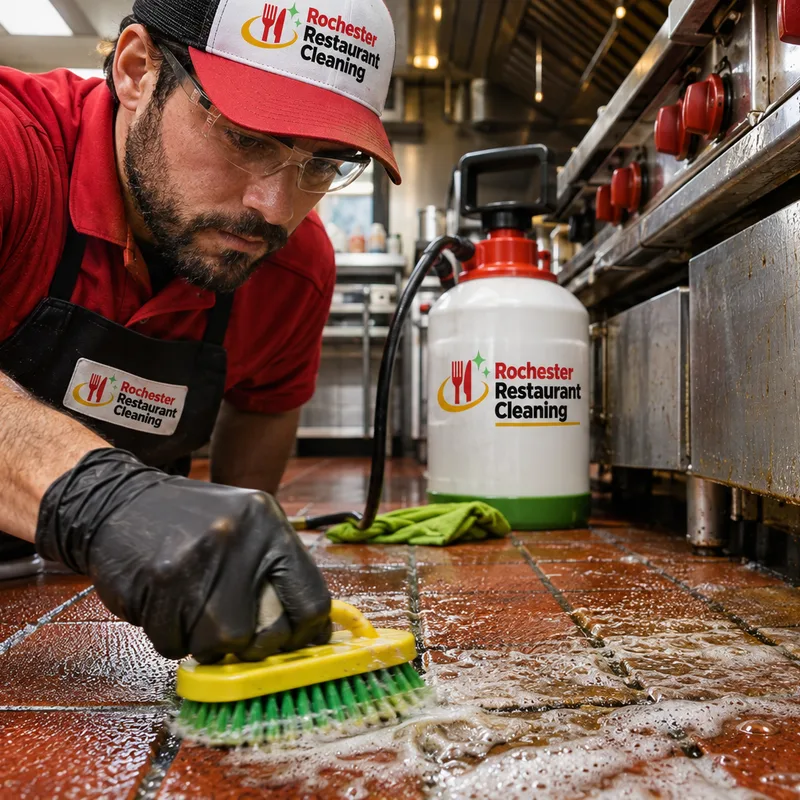
Restaurant floor degreasing starts with the chemistry, dwell time, agitation, and recovery method appropriate for the surface. A commercial degreaser needs enough contact time to loosen oily residue. Mechanical agitation then works the cleaning solution into textured tile and grout joints. The suspended soil must be recovered rather than left to dry back onto the floor.
We pay close attention to cook lines, fryer areas, dishwashing stations, walk-in entrances, floor-wall transitions, and paths between storage and preparation areas. These locations often collect heavier residue than the open center of a kitchen. Edges and corners may need detailed hand agitation because large equipment cannot reach them.
Restaurant tile cleaning must also respect the material. Quarry tile is common in commercial kitchens because it is durable, but its textured surface and grout lines can retain grease. Ceramic tile, porcelain tile, epoxy grout, cementitious grout, and resinous flooring may require different products or agitation. A test area helps confirm compatibility before full treatment. We do not assume every hard kitchen floor can take the same chemical concentration or tool.
Cleaning Capabilities
Airborne oils and small spills can create a bonded film near fryers, ranges, and prep equipment. These areas often need stronger agitation and careful recovery.
Low grout lines collect soil that ordinary flat mopping may pass over. Restaurant grout cleaning uses direct chemical contact and agitation to lift embedded residue.
Food particles, detergent residue, and continual moisture can collect around sinks and dish machines. Cleaning should reach edges and floor-wall transitions without flooding sensitive equipment.
Traffic between receiving, storage, and preparation areas carries grit and residue across the floor. Attention to these routes helps remove the film left by repeated foot and cart traffic.
Winter slush and deicing residue add mineral soil to kitchen grease. These entry points may require separate treatment before the main floor is cleaned.
Mobile racks and equipment with safe clearance can expose neglected floor areas. The agreed scope should identify what can be moved and what must remain in place.
We identify the flooring type, grout condition, heaviest buildup, drains, floor transitions, fixed equipment, and access constraints. This review also establishes which areas must remain available.
Loose debris is removed, movable items are cleared as agreed, and sensitive surfaces are protected. Food and utensils should be secured before chemicals or powered equipment enter the work zone.
Cleaning solution is applied at a concentration suited to the surface and soil. It is given controlled dwell time so grease can loosen without being allowed to dry.
Mechanical scrubbing addresses open floor areas, while detailed tools reach grout joints, corners, edges, and accessible spaces around equipment.
The released grease and soil are extracted or recovered. The floor is rinsed as needed to remove loosened residue and cleaning solution, with water managed around drains and equipment.
We inspect treated areas, address remaining spots within the agreed scope, and discuss a sensible service interval based on traffic, menu, floor condition, and routine maintenance.
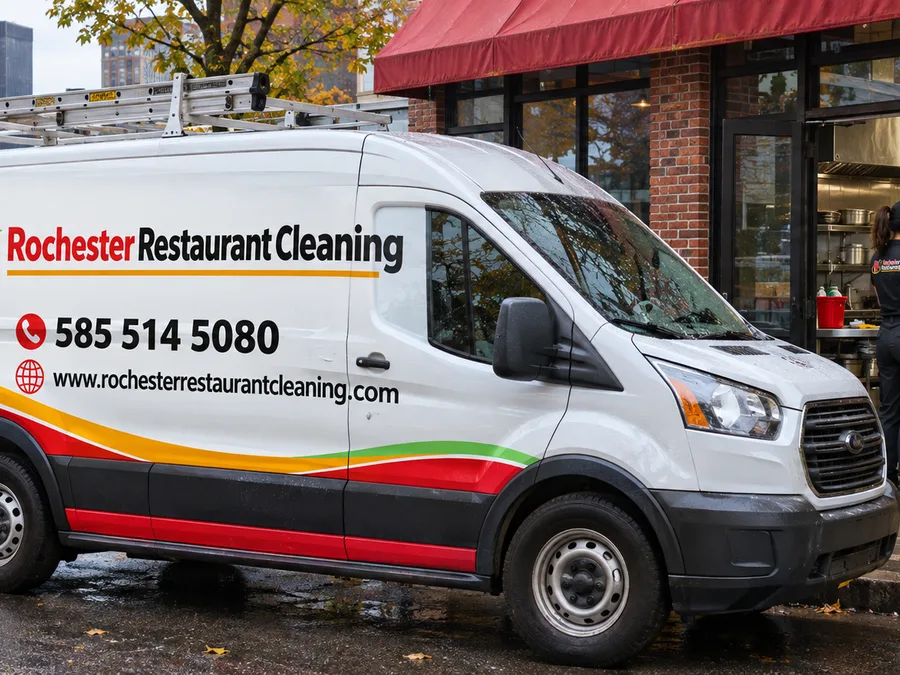
A kitchen cannot simply stop whenever the floor needs attention. Cleaning may be planned after closing, before prep begins, or during another agreed low-activity window. The time required depends on square footage, buildup, equipment density, and whether the job covers one production area or the full back of house. Drying time and safe access must also be considered before employees return.
Local layouts vary. Downtown restaurants may have narrow service corridors and restricted loading access. Park Avenue businesses often operate in mixed-use buildings where noise and equipment movement need careful timing. Henrietta restaurants may have larger kitchens and longer traffic paths between receiving, storage, and cook lines. Irondequoit and Greece locations can face more tracked-in winter residue around rear entrances. These conditions affect setup, equipment choice, and the order in which areas are cleaned.
One-time kitchen floor degreasing can address accumulated buildup before an opening, inspection, management change, or seasonal reset. Recurring commercial floor cleaning in Rochester can be scheduled according to cooking volume and floor condition. Daily staff cleaning remains necessary between professional visits; periodic deep cleaning addresses residue that routine mopping leaves behind.
Written Scope
A useful proposal should define the exact areas being cleaned, the floor materials, the expected preparation, and any access limits. It should state whether the work includes open floor, grout lines, edges, corners, accessible spaces beneath movable equipment, and front-of-house tile. Equipment movement should never be assumed. Heavy or connected appliances may need to remain in place unless another qualified party handles them.
The scope should also address water access, drains, recovery, drying, and scheduling. A floor drain is helpful, but it does not replace controlled soil recovery. Grease-laden wastewater and chemical residue must be managed responsibly, and excessive water should not be pushed into joints, walls, or equipment bases.
Expectation setting matters with stained grout and worn flooring. Cleaning removes soil; it does not repair cracked tile, failed grout, etched surfaces, damaged coatings, or permanent discoloration. Once buildup is removed, pre-existing wear may become more visible. Rochester Restaurant Cleaning explains these distinctions before work begins so operators can separate cleaning needs from flooring repairs.
Describe the kitchen layout, floor material, problem areas, and preferred service window to receive a clear scope for tile, grout, and degreasing work.
Call for a Free QuoteFrequently Asked Questions
Pricing depends on cleanable square footage, grease accumulation, flooring type, equipment density, access, and service frequency. A compact open floor with routine maintenance takes less labor than a heavily soiled kitchen with deep grout joints and many edges. After inspecting the Rochester location or reviewing enough job details, we define the covered areas and confirm the price before scheduling.
Yes, service can often be arranged during an agreed window after closing or before food preparation starts. The schedule must allow time for preparation, degreasing, agitation, recovery, rinsing, and drying. Downtown access restrictions, mixed-use buildings on Park Avenue, and winter delivery conditions can affect arrival and setup time.
Cleaning can remove embedded grease and soil, but it cannot guarantee an original color when grout is permanently stained, worn, chemically damaged, or previously coated. Cementitious grout is porous and may retain discoloration after soil is removed. A test area gives the clearest indication of the likely result.
Quarry tile can usually be professionally degreased when the product, concentration, dwell time, and agitation are suited to the tile and grout. The surrounding materials matter too. Metal equipment bases, painted surfaces, damaged grout, and adjacent flooring may require protection or a milder approach.
Only items identified in the agreed preparation plan should be moved. Racks, mats, bins, and light mobile equipment may be cleared when safe, but connected or heavy appliances should not be moved casually. We establish access expectations before the appointment so the cleanable area is clear.
The right interval depends on cooking volume, menu, traffic, floor texture, and the quality of daily maintenance. Fryer-heavy operations may need deeper cleaning more often than kitchens with limited oil use. Rochester winters can also increase grit and deicing residue near receiving and employee entrances, which may change the service interval.
Dining-room tile can be included when it is identified in the scope and enough time is available for cleaning and drying. Front-of-house soil differs from cook-line grease, so the products and tools may change between areas. Seating, customer access, and opening time also affect scheduling.
The duration is set by floor area, buildup, grout condition, access, and drying requirements. A defined kitchen zone may fit into one service window, while a large back of house with dense equipment can require staged work. The expected timing is confirmed after the scope and access plan are reviewed.
Tell Rochester Restaurant Cleaning where grease and buildup are collecting. We will review the floor, access, and operating schedule, then outline a practical cleaning plan.