Kitchen Cleaning · Irondequoit, NY

Restaurant Kitchen Cleaning In Irondequoit

Detailed degreasing, sanitizing, and overhead cleaning built around your kitchen layout, operating schedule, and food-safety priorities.

✓Detailed degreasing ✓Surface sanitizing ✓Overhead high dusting
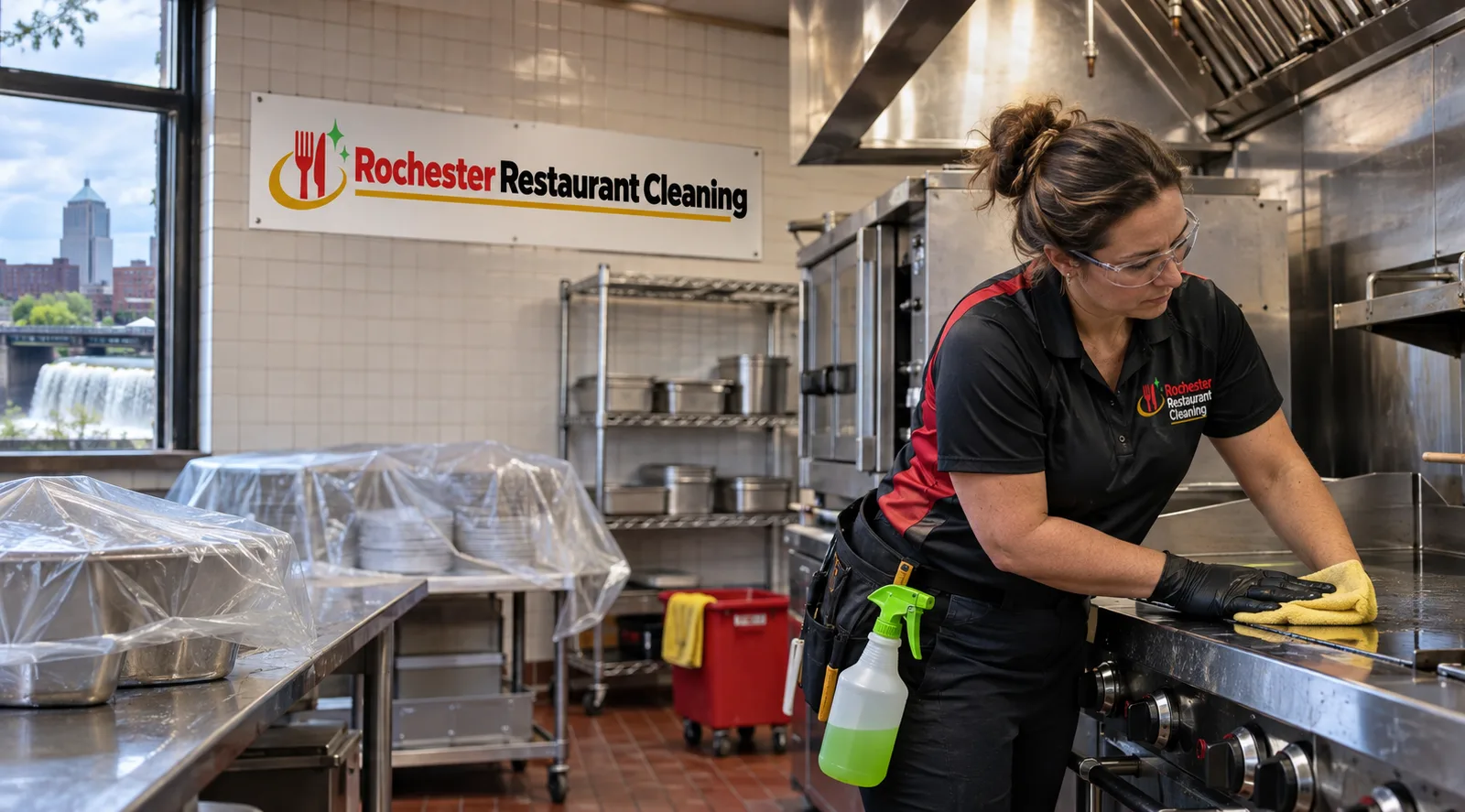
A trained cleaner detailing stainless-steel cooking equipment in an Irondequoit restaurant kitchen while nearby food-contact items are safely covered.

Irondequoit Kitchen Care

Restaurant Kitchen Cleaning Irondequoit Operators Can Schedule With Confidence

Grease does not stay at the cooking line. Aerosolized residue settles on equipment sides, walls, shelving, pipes, light covers, and other overhead surfaces. Restaurant Kitchen Cleaning Irondequoit addresses those deposits with a written scope based on the facility, soil level, access, and operating schedule.

Rochester Restaurant Cleaning works as a professional restaurant company in Rochester, providing hands-on kitchen cleaning for Irondequoit food-service facilities. The work can be planned for a one-time reset, periodic deep cleaning, or recurring maintenance. Before cleaning begins, the team identifies sensitive equipment, food-contact surfaces, access limitations, and areas that need extra dwell time.

Irondequoit's restaurant mix includes busy commercial corridors near East Ridge Road and independent dining businesses near Titus Avenue. Kitchens in these settings may differ in size and service volume, so the scope should follow actual conditions rather than a generic checklist. Cold winters also bring tracked-in salt and slush into receiving and back-of-house routes, adding floor and lower-wall residue that deserves attention during a deep clean.

What a Detailed Kitchen Cleaning Can Cover

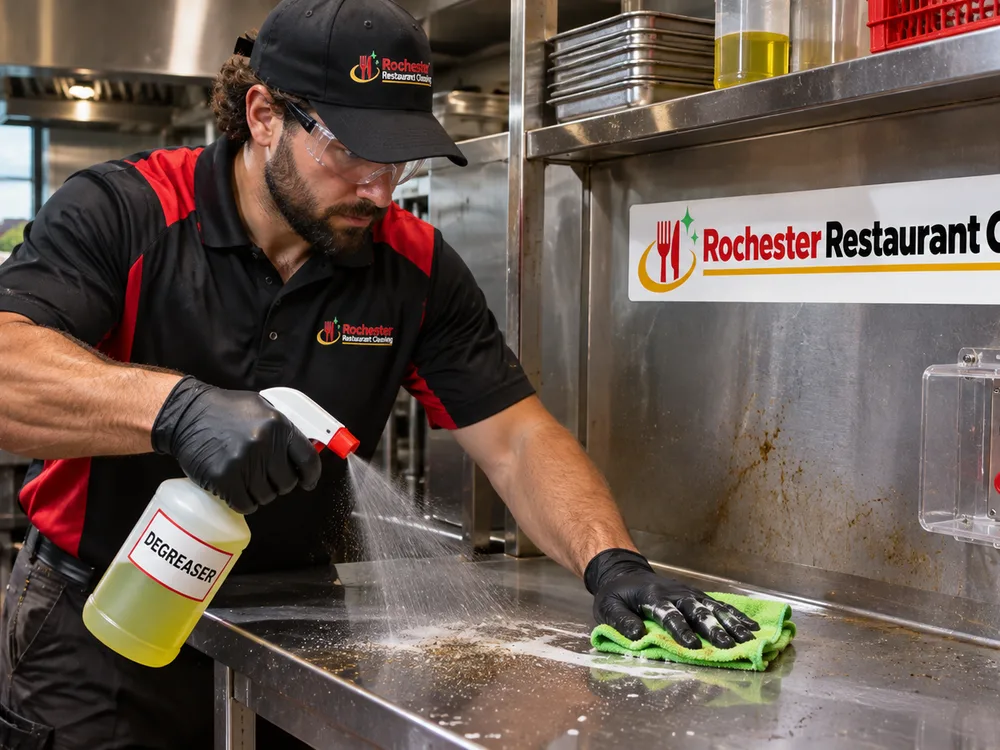
Close view of a cleaner applying degreaser to a stainless-steel prep area, with chemicals labeled and nearby controls protected.
Surface-specific products and controlled dwell time help remove grease without careless treatment of equipment.

A proper scope separates routine janitorial work from accumulated kitchen soil. Degreasing may include cooking-equipment exteriors, stainless-steel tables, shelving, backsplash areas, walls, washable doors, kick plates, carts, and accessible utility lines. Floor work can target corners, edges, grout lines, areas beneath movable equipment, and the grease film that ordinary mopping leaves behind.

Cleaning follows the surface. Stainless steel needs compatible chemistry and work with the grain to reduce scratching. Painted walls, plastic components, rubber seals, and electrical controls require different handling. Degreasers need suitable dilution and dwell time, while sanitizers must be used according to their labels on appropriate cleaned surfaces. Soil removal comes first because sanitizer is not a substitute for cleaning.

The scope does not automatically include internal hood, duct, or exhaust-fan cleaning. Those fire-safety services require specialized access and should be clearly distinguished from wiping accessible hood exteriors and nearby surfaces. Waste handling, pest treatment, and equipment repair are also separate unless expressly included in a written agreement.

Cleaning Capabilities

Cleaning Priorities for a Working Food-Service Facility

Cooking-Line Degreasing

Accessible equipment exteriors, splash zones, walls, ledges, casters, and floor edges are treated according to soil level and surface type. Heavy deposits may require repeat application and agitation rather than stronger chemistry alone.

Prep and Storage Areas

Empty, accessible shelves, tables, carts, washable bins, and nonporous surfaces can be cleaned and sanitized within the agreed scope. Food, utensils, and smallwares must be removed or protected before work starts.

Floors and Low-Level Buildup

Corners, grout lines, transitions, and spaces beneath movable equipment collect grease and debris. The cleaning plan accounts for drainage, slip risk, safe chemical recovery, and the floor material.

Walls, Doors, and Touchpoints

Washable walls, door faces, push plates, handles, and other frequently touched areas receive appropriate cleaning. Product choice matters around painted finishes, gaskets, and electrical components.

Receiving and Back-of-House Routes

Tracked soil, cardboard debris, and winter salt can build up between entrances, storage areas, and the kitchen. These paths can be incorporated when they affect cleanliness and safe movement.

Scheduled Maintenance

Recurring visits can focus on rotating detail areas instead of waiting for widespread buildup. Frequency is based on cooking volume, menu, ventilation, staffing routines, and inspection priorities.

Restaurant High Dusting in Irondequoit

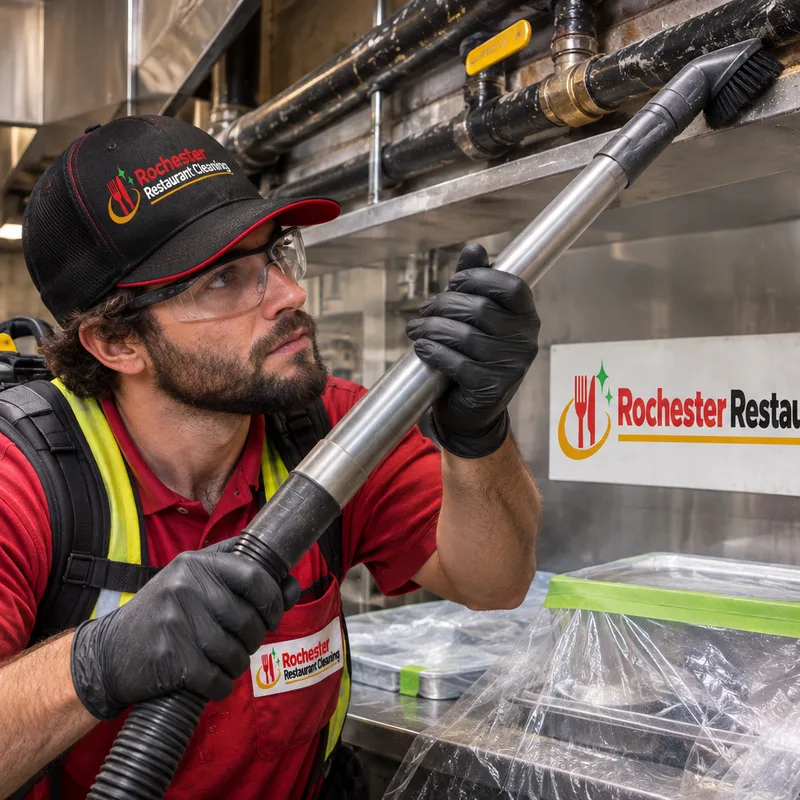
A cleaner using a HEPA-filtered vacuum extension on exposed overhead pipes and ledges in a closed restaurant kitchen, with prep surfaces protected beneath.
Top-down cleaning removes overhead dust before final work on counters and floors.

Restaurant High Dusting Irondequoit targets accessible overhead surfaces that routine wiping rarely reaches. Typical areas include exposed pipes, conduit, tops of walk-in boxes, ceiling vents, structural ledges, light housings, wall-mounted equipment, and the upper faces of signs or cabinets. The exact list depends on ceiling height, construction, and safe access.

Overhead work should occur before lower surfaces and floors are finished. This top-down order captures dislodged dust and residue during the remaining cleaning steps. Food, clean utensils, prep surfaces, and sensitive equipment are removed, covered, or isolated first. HEPA-filtered vacuuming and controlled wiping may be used where dry dust removal is appropriate; greasy deposits often need compatible wet cleaning.

High dusting is planned around occupied-space safety. Ladders or other access equipment need stable placement, and work zones should stay clear of staff traffic. Cleaners should never reach over active fryers, open food, or energized equipment. Accessible ventilation covers may be cleaned, but internal exhaust systems and inaccessible ceiling components require their own qualified service arrangements.

Our Process

How the Cleaning Is Planned and Completed

Request a Callback
01

Walk Through the Facility

The first review identifies kitchen zones, soil conditions, equipment that can move, available utilities, ceiling access, drainage, shutdown requirements, and areas excluded from the work.

02

Confirm the Written Scope

The plan records surfaces to be cleaned, high-dusting areas, preparation responsibilities, timing, access, and any limitations. It also distinguishes general kitchen cleaning from internal hood and duct service.

03

Prepare and Protect

Food and clean smallwares are secured. Sensitive controls and equipment are protected as appropriate, warning signs are placed, and the work sequence is organized to avoid cross-contamination.

04

Clean From High to Low

Overhead dust and residue are addressed first. The team then works through equipment exteriors, shelving, walls, touchpoints, and floors using products and tools suited to each material.

05

Inspect and Reset the Work Area

Completed areas are checked against the agreed scope. Residue is removed, floors are left in a safe condition, movable items are returned as arranged, and any inaccessible or damaged area is documented.

Scheduling and Scope

A Scope Built Around Your Kitchen, Not a Stock Checklist

Request a Callback

Frequency Follows Actual Conditions

Cleaning frequency depends on what the kitchen produces and how quickly residue returns. Frying and high-volume cooking can create heavier airborne grease than light preparation. Late-night service, limited shutdown windows, compact equipment spacing, and high ceilings also affect labor and access.

Start With a Manageable Baseline

An initial deep clean can establish a manageable condition before recurring service begins. After that, high-use zones may need attention more often than storage ledges or overhead pipes. A rotating plan can keep the workload practical while addressing areas that staff cannot safely reach during daily closing duties.

Coordinate Access and Reopening

Restaurants near major Irondequoit commercial routes may need work scheduled after service or during a planned closure to keep customer and delivery traffic away from wet floors and access equipment. Rochester Restaurant Cleaning can review the facility from its Rochester operating base when discussing an Irondequoit scope. The resulting plan should identify who moves equipment, who secures food, when cleaned areas can reopen, and which conditions could change the schedule.

Arrange a facility review to define the grease-removal, sanitation, floor, and high-dusting work your kitchen actually needs before a schedule is set.

Call for a Free Quote

Frequently Asked Questions

Questions About Restaurant Kitchen Cleaning in Irondequoit

How much does restaurant kitchen cleaning in Irondequoit cost?

Pricing depends on kitchen size, grease level, ceiling height, equipment access, and whether the work is a one-time reset or recurring service. A compact prep kitchen with open access requires less labor than a high-volume cooking line with heavy buildup and overhead cleaning. After a facility review, the written scope can identify included surfaces, preparation duties, scheduling needs, and the basis for the quoted price.

Can cleaning be scheduled after the restaurant closes?

Yes, restaurant kitchen cleaning can be planned outside operating hours when access and staffing arrangements permit. Irondequoit locations near busy corridors such as East Ridge Road may benefit from work after customer service and deliveries end. The schedule should still allow enough time for preparation, cleaning, inspection, floor drying, and any required product contact time before the kitchen reopens.

How long does a deep kitchen cleaning take?

The duration is determined by the agreed scope, access, and buildup rather than the room's square footage alone. A focused cleaning of accessible equipment exteriors and floors may fit within one shutdown window, while heavy degreasing and high dusting can require a longer visit or staged work. A walkthrough establishes whether equipment movement, ceiling access, or repeat degreaser applications will extend the schedule.

Does restaurant high dusting include hood and exhaust-duct cleaning?

No, high dusting should not be assumed to include internal hood, duct, or exhaust-fan cleaning. High dusting generally covers accessible pipes, ledges, vents, light housings, and equipment tops within the written scope. Internal grease-exhaust systems involve specialized fire-safety work, so Irondequoit operators should confirm that service separately rather than treating an exterior hood wipe as equivalent.

Do we need to remove food and equipment before the cleaners arrive?

Food, clean utensils, and smallwares should be removed or securely protected before cleaning begins. The walkthrough determines which movable equipment the restaurant staff will disconnect or reposition and which items can safely remain. Gas, electrical, refrigeration, and fire-suppression connections must not be disturbed casually, and immovable equipment may limit access to certain surfaces.

Can the kitchen be sanitized without first being degreased?

No, visible grease and food soil need to be removed before an appropriate sanitizer is applied. Sanitizers must be mixed and used according to their labels, including stated contact time and surface requirements. In a working Irondequoit restaurant, the sequence should separate dirty tools and runoff from cleaned prep areas so soil is not transferred back onto finished surfaces.

How often should an Irondequoit restaurant schedule deep cleaning and high dusting?

The right interval depends on cooking volume, menu, ventilation, ceiling configuration, and the effectiveness of daily staff cleaning. Heavy frying may create faster grease accumulation, while high exposed ceilings can allow dust to remain unnoticed. A practical recurring plan assigns frequent attention to cooking-line and floor trouble spots and rotates slower-building overhead areas according to observed conditions.

Plan a Cleaner, Safer Kitchen Shutdown

Share your kitchen layout, operating hours, problem areas, and high-dusting needs. Rochester Restaurant Cleaning will use those details to prepare a clear scope and practical cleaning schedule for your Irondequoit facility.